
Overview of dental implants
Lost a tooth and wondering if it’s finally time for dentures? If so, we recommend implant treatment. An implant restores not only the look of a lost tooth but also a bite and function like a natural tooth’s. Also called a “second permanent tooth,” it has drawn a lot of attention. There’s no daily maintenance hassle at all, and unlike a bridge, it puts no strain on the healthy teeth around it.
Benefits of implant treatment
-
Restored function
You can expect to regain the ability to chew firmly even on harder foods. Chewing well matters a lot for your overall health, including brain activity and mood.
-
Restored sensation
Dentures and bridges often feel unnatural, but an implant bites and feels close to your own teeth, so you can enjoy your meals.
-
No tooth decay
Tooth decay happens when acid from decay-causing bacteria dissolves the enamel. An implant is made from a hard material, so it will never decay.
-
Natural, attractive appearance
It looks natural enough that you can hardly tell which tooth is the implant. The difference from a gap where a tooth is missing is obvious.
-
Little day-to-day care
All it needs is your usual brushing and oral care. Unlike dentures, there’s no taking it out or disinfecting it, so hygiene isn’t a concern either.
-
No effect on healthy teeth
Bridges and dentures both place a load on your remaining teeth. Implant treatment works only at the site of the missing tooth, so it can be carried out without adding any load to your other teeth.
Drawbacks of implant treatment
-
Requires surgery
Because it involves surgery, it places a corresponding load on the body, so depending on your health, this treatment may not always be suitable.
-
Takes time
Besides the surgery, you will need several visits for extractions and other procedures, and osseointegration takes at least two months. Treatment inevitably takes a long time to complete.
-
Costs money
Implant treatment is not covered by public health insurance, so it is paid for privately, and because it involves surgery, it comes at a cost. You can use the medical expense deduction or a dental loan.
-
Maintenance
Finishing treatment is not the end — regular maintenance is the most important part. Please come in for regular check-ups so we can confirm your bite and how stable the implant is, and prevent problems such as peri-implantitis.
-
Failure to integrate
Even the most skilled dentist can encounter this. In most cases it is caused by a strong external force before osseointegration is complete, or by bacterial infection or smoking. Because it is a technically demanding treatment, the bone and implant can occasionally fail to fuse due to the implant position or damage during surgery, leading to looseness or loss. To avoid this, you can rely on Hamille’s experience and track record.
-
Pain, swelling or numbness that does not go away
This is usually thought to be caused by bacterial infection or pressure on a nerve, so it matters that you are treated at a clinic with strict hygiene control and access to detailed diagnosis such as a CT scan.
Handa dentist | 歯科ドクターHa
Implant Treatment Process
The whole course of treatment takes around 3–7 months.
Consultation and treatment planning
After a full explanation and discussion, we put together the treatment plan that suits you best.
Examination and diagnosis
An intraoral examination and X-ray.
First surgery
The implant is placed into the jawbone and the site is stitched closed (about as involved as an extraction). * If there is not enough bone to place the implant, bone grafting is needed first, which takes 6–8 months.
Stitch removal
The stitches are removed after about 1–2 weeks, and we check how healing is progressing.
Healing period
A healing period of about 2–6 months until the implant and bone are integrated. * This varies from person to person.
Observation
Please come in regularly so we can check how the surgical site is healing.
Second surgery
The abutment (post) is fitted, followed by a healing period of about 1–6 weeks.
Making and fitting the crown
Once healed, we take an impression, have a crown custom-made in the shape and colour that suits you best, and fit it onto the implant.
* The whole course of treatment takes around 3–7 months.
Handa dentist | 歯科ドクターHa
Implant Costs and Insurance
Implant treatment is not covered by public health insurance. You can use the medical expense deduction or a dental loan.
Basic cost
CT examination, check-up and diagnosis = free
First-stage implant placement surgery = ¥220,000
Second-stage placement surgery + crown = ¥220,000
The costs below are additional charges that may be needed depending on the condition of your mouth. For a diagnosis and a quote, please come in for a free examination first.
GBR (guided bone regeneration)
Insufficient bone thickness or height = ¥55,000 (small) / ¥110,000 (large)
Artificial membrane to guide bone regeneration = ¥55,000
Maxillary sinus lift
Upper jawbone too thin for placement = internal sinus lift ¥77,000
Upper jawbone severely too thin for placement = external sinus lift ¥220,000
Other
Surgical guide = ¥55,000
Mock-up set (laminate veneers) = ¥132,000
Handa dentist | 歯科ドクターHa
Risks and Side Effects of Implant Treatment
Risks from human error
Damage to nerves or blood vessels, nerve paralysis, drilling through into a cavity in the skull and causing inflammation, or the implant failing to bond and becoming loose or coming out
- Cause 1: the treatment plan was not based on a precise, advanced examination and diagnosis using CT
- Countermeasure 1
First, check whether the clinic has a CT scanner. Also discuss with your dentist whether the bone is thick enough and the right shape, and whether an implant of enough length can be placed. Make sure the risks at each treatment site are explained to you, and go ahead only once you are comfortable with the treatment. Lower jaw: A large nerve runs through the mandibular canal, so the drilling for the implant must avoid the mental foramen (where the nerve and blood vessels exit) and must not damage nerves or blood vessels. Upper jaw: Drilling through into the cavity called the maxillary sinus damages the sinus lining and causes sinusitis, with symptoms such as a stuffy nose, pus discharge, pain under the eyes and a heavy feeling in the head. To keep the implant from entering the sinus, bone density and any lack of bone volume must be assessed in detail.
- Cause 2 — insufficient experience or skill on the dentist’s part can lead to errors in implant position or angle, or insufficient irrigation during drilling can leave the bone in a burn-like state, so it fails to integrate and becomes loose or falls out early.
- Countermeasure 2
It’s important to be treated by an experienced, skilled dentist. This can be hard to judge, but choose a dentist who gives you a clear explanation of things such as how many cases they handle a year and what the risks are, and whom you feel you can trust. In more than 30 years of treatment, our clinic has had no accidents caused by this kind of human error.
Risk of loss (causes other than human error)
Once osseointegration is complete, an implant should let you chew firmly, but sometimes it fails to integrate and becomes loose or is lost.
- Cause 1 — a range of factors, such as a strong force from teeth grinding or clenching before osseointegration is complete, or smoking or bacterial infection.
- Countermeasure 1
If the implant is lost because it failed to integrate, we will redo the surgery free of charge. We also offer a 10-year warranty, so please check whether your clinic offers this kind of guarantee after treatment.
- Cause 2: Bacterial infection from neglecting home care or regular maintenance. This leads to peri-implantitis, and the surrounding bone dissolves little by little until the implant comes out.
- Countermeasure 2
Implant treatment does not end when the surgery is finished. An implant itself cannot decay, but inflammation can still develop around it if the mouth is not kept clean. Having gone to the trouble of getting an implant, home care and regular maintenance at the dental clinic both matter for making it last. Choose a clinic that explains aftercare clearly before treatment and that you can keep visiting easily over the long term.
Appearance risk (mainly in front teeth)
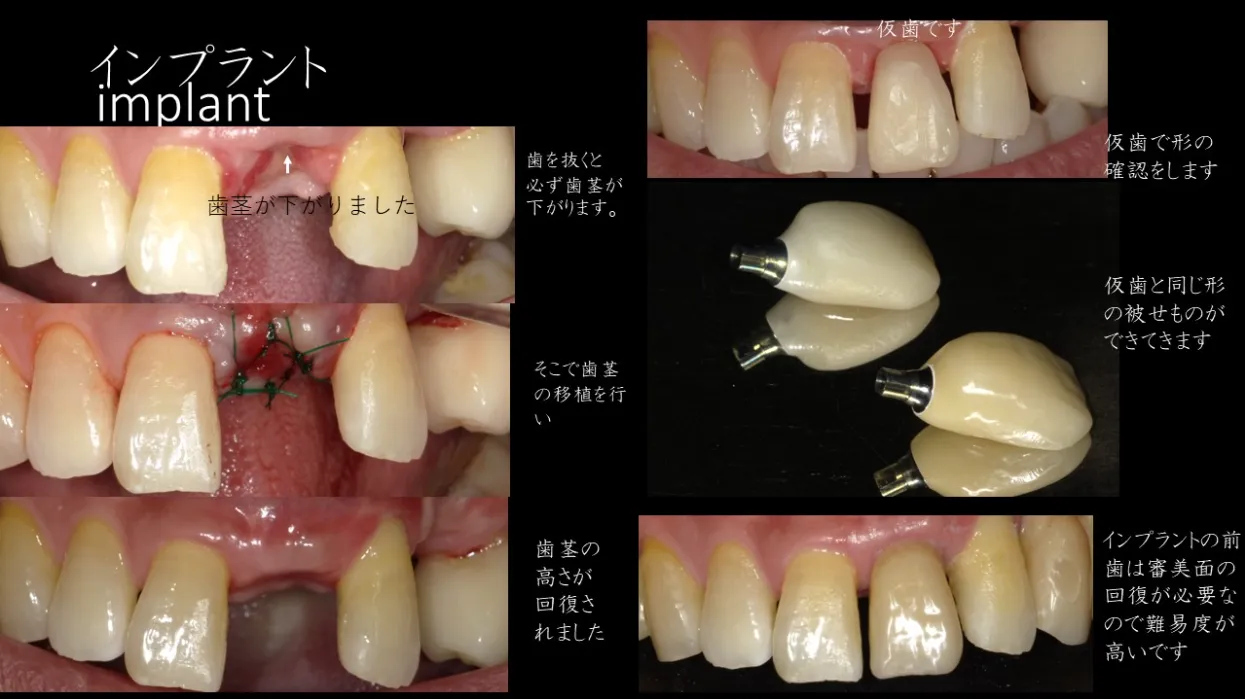
The implanted tooth can look longer than the others, or the metal post can show through and look dark.
- Cause 1 — gum recession from brushing habits or peri-implantitis can make the implant more visible, and this can also happen when the bone or gum is too thin.
- Countermeasure 1
Do not brush too hard — take proper care of your teeth yourself, and visit the dental clinic regularly to keep your mouth clean. If the cause is insufficient thickness, we graft the amount of bone and gum tissue the implant needs.
Other
○Please do not undergo implant treatment during pregnancy, if you may be pregnant, or while breastfeeding.
○Because surgery places a load on the body, this treatment may not always be suitable, depending on conditions such as heart disease, diabetes or osteoporosis. Please also be sure to tell us if you are taking blood pressure medication or an anticoagulant.
○Depending on the hygiene of your mouth, we may first need you to improve your habits or complete treatment to bring your mouth to a clean state.
○You may experience pain, swelling, bruising, a foreign-body sensation or bleeding after surgery, but in most cases this settles within a few days.
○If you have any of the following underlying conditions, please consult your dentist beforehand
: circulatory conditions (ischaemic heart disease, hypertension, congenital heart disease, infective endocarditis, etc.), respiratory conditions (bronchial asthma, aspirin-induced asthma, chronic obstructive pulmonary disease, etc.), digestive conditions (liver dysfunction, kidney dysfunction, gastric or duodenal ulcer, etc.), metabolic and endocrine conditions (diabetes, osteoporosis, hyperthyroidism, hypothyroidism, adrenal disorders, etc.), psychiatric conditions (schizophrenia, depression, etc.), cerebrovascular disease (cerebral infarction, cerebral haemorrhage, etc.), autoimmune conditions (rheumatoid arthritis, systemic lupus erythematosus, etc.), allergic conditions (metal allergy, drug allergy), specific infections (HBV, HCV, HIV, etc.), medication-related concerns (patients on bisphosphonates, steroids or antithrombotic therapy, etc.), and other patients with a past history of head and neck cancer or radiotherapy
○Other occasional reactions: neurogenic shock, hyperventilation syndrome, local anaesthetic toxicity, local anaesthetic allergy, altered sensation, subcutaneous bleeding, swelling, pain, and so on.
Handa dentist | 歯科ドクターHa
Aftercare After Implant Treatment
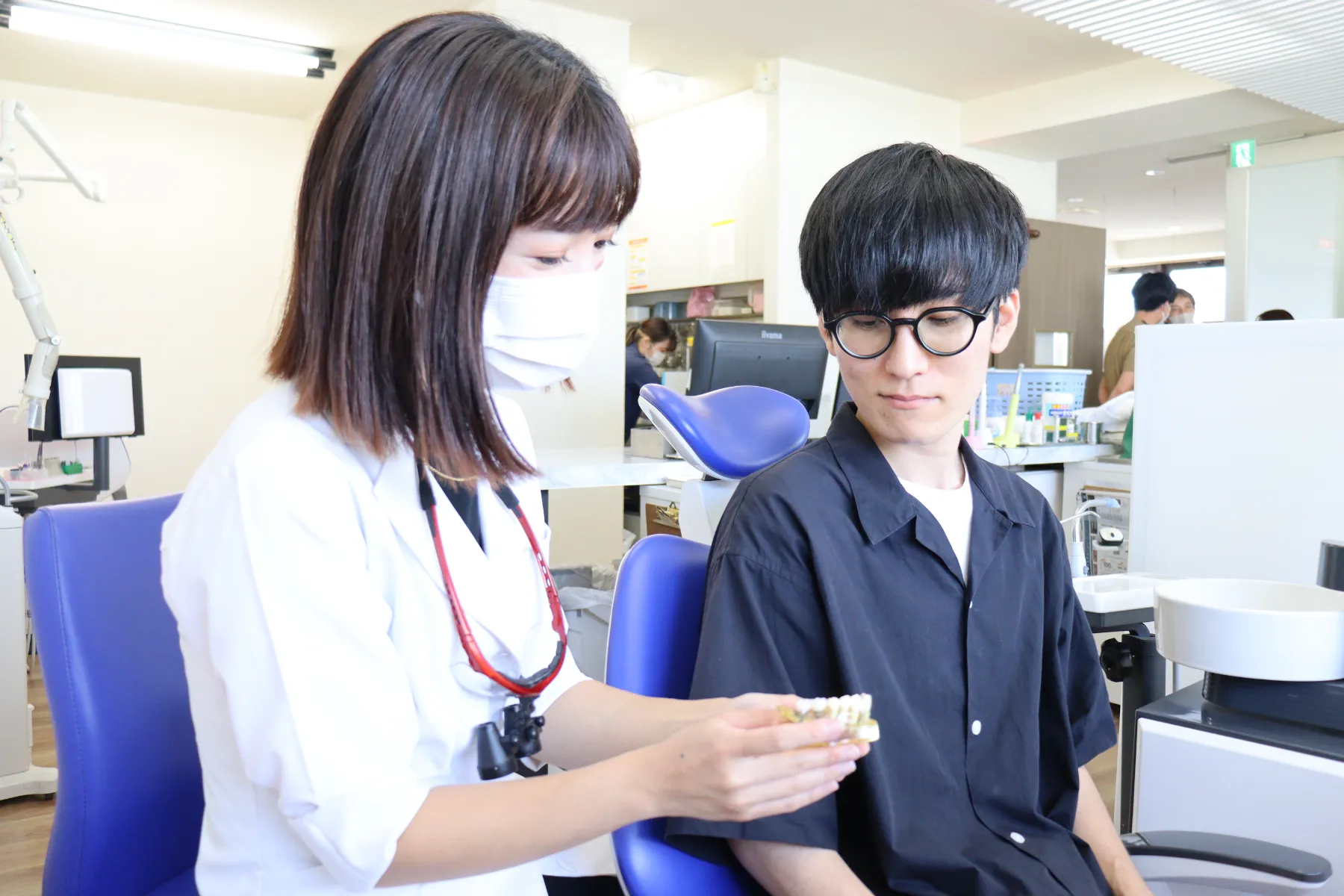
The basis of aftercare is everyday brushing. Alongside a toothbrush, please also use tools such as interdental brushes and floss — keeping your mouth clean matters.
We recommend a check-up every 3 months, so our staff can clean the area professionally and check how the surgical site is healing.
We also offer a 10-year warranty: if a problem arises, we provide cover appropriate to how much time has passed. Regular check-ups are one of the conditions for the warranty, so please keep your mouth healthy and make your implant last.
Handa dentist | 歯科ドクターHa
Implant Success Rate and Track Record
With this many risks, many people may wonder whether they should avoid implants. But these drawbacks come mainly from lack of skill or poor hygiene, and as long as you keep up proper maintenance, the 10–15-year survival rate is quite high, at about 90%. The survival period is expected to grow longer as more years pass, and it’s fair to say an implant can be used almost permanently. The benefits outweigh the drawbacks. Many people worry, but our clinic places about 100 or more implants a year and has kept a 100% success rate for over 30 years.
FAQ about implant treatment
- QWhat is a dental implant?
- AWhen a tooth is lost, an implant (an artificial tooth root) is embedded in place of the root, and a crown is attached to it. An artificial device placed in the body is called an “implant”; in dentistry, the term refers to a dental implant.
- QWhat are the benefits of implant treatment?
- AImplant treatment is the only treatment that can restore the function of a missing tooth without sacrificing any of your remaining teeth.
- QDoes implant treatment hurt?
- AWe use anesthesia during surgery, so you won’t feel pain. You may have some pain for a few days after the anesthesia wears off.
- QHow long does the surgery take?
- ASurgery takes around 60 minutes per implant. This can vary depending on the treatment, so please check with your dentist.
- QHow long does an implant last?
- AGenerally around 10–15 years, but this can be shorter if aftercare is neglected, or as long as 20–30 years with proper aftercare.
- QI smoke. Can I still have implant treatment?
- AIt is possible, but smokers face a higher risk than non-smokers. You will need to stop smoking for at least a week after surgery.
- QI was turned down for implants because of insufficient bone. Can I still have implant treatment?
- AGuided bone regeneration (GBR) or a sinus lift procedure can sometimes still make implant surgery possible. Please come in for an examination first.
- QI have a metal allergy. Can I still have implant treatment?
- AImplants are made of titanium, so unless you have a titanium allergy, you can have the surgery. Please discuss this with your dentist beforehand.
- QI have an underlying condition. Can I still have implant treatment?
- AThe risk is higher, so whether treatment is possible depends on how stable your condition is and the state of your mouth. Please discuss this with your dentist beforehand.
- QCan I claim the medical expense deduction?
- AImplant treatment qualifies for the medical expense deduction, and claiming it can refund part of the income tax you have paid. The amount depends on your income.
Handa dentist | 歯科ドクターHa
Implant Cases
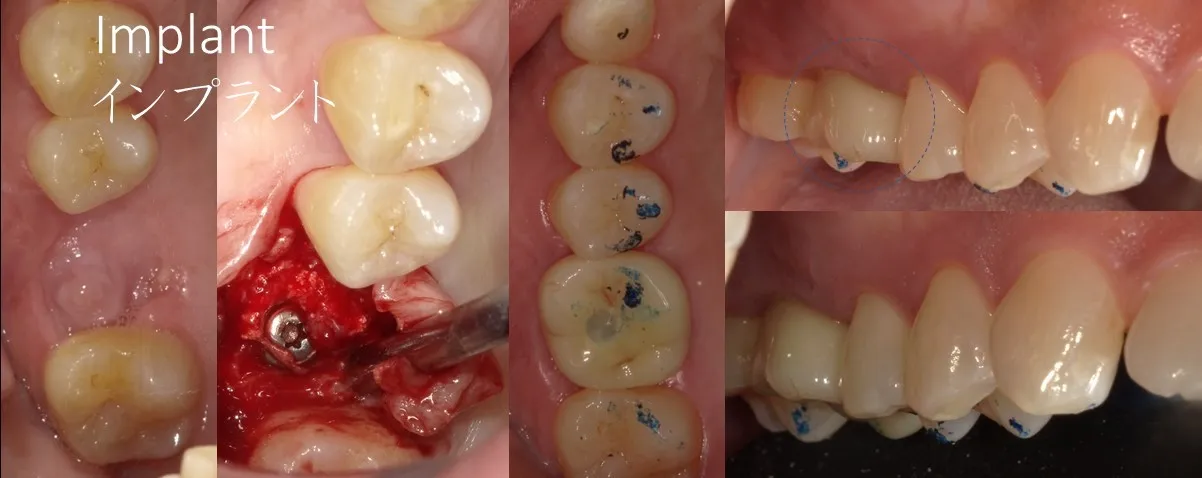
Implant case 1
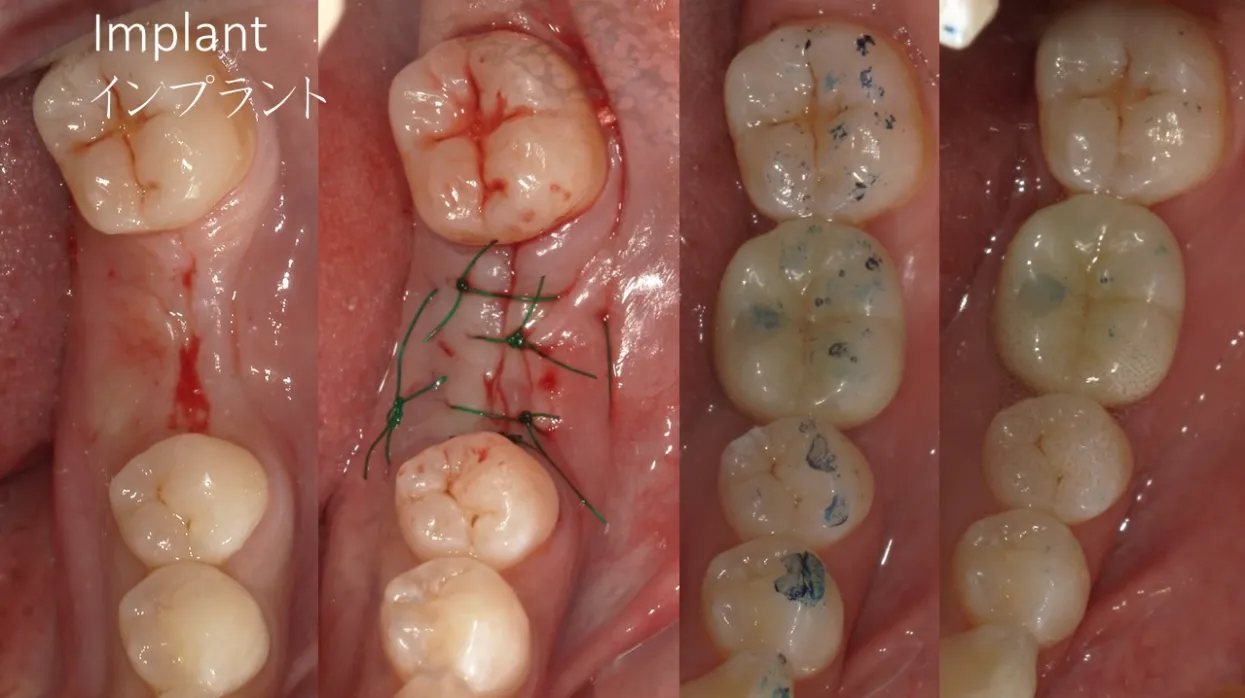
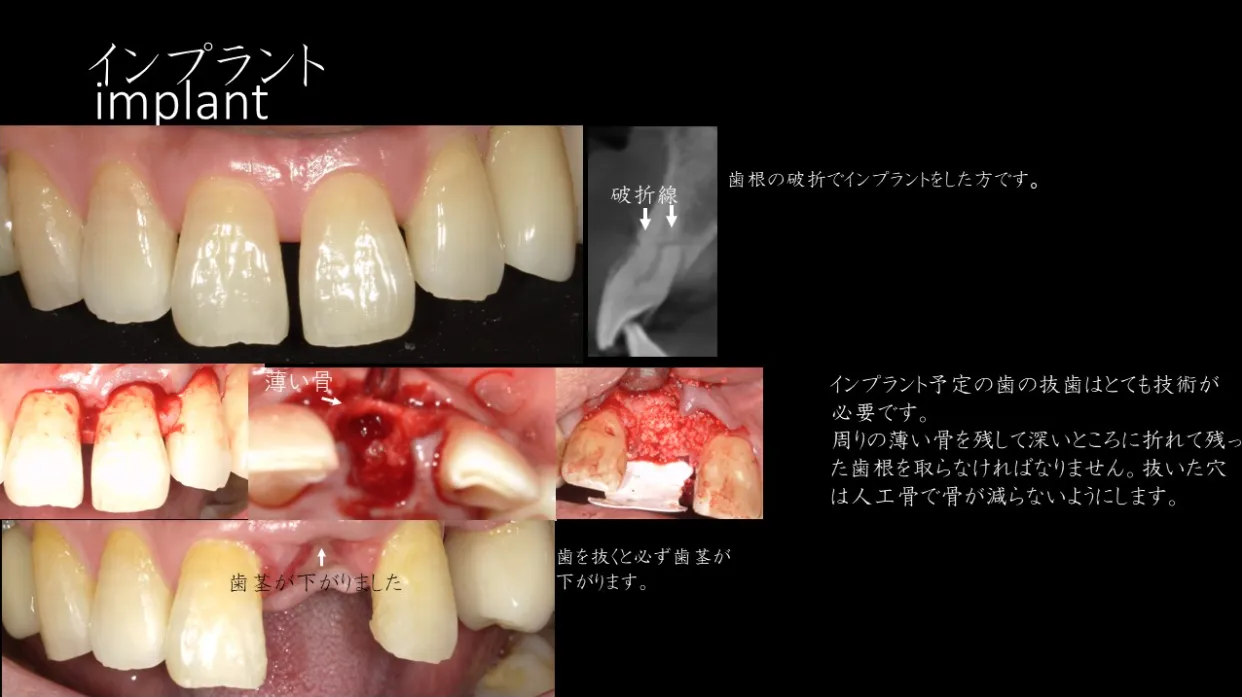
This patient’s tooth fractured and had to be extracted. They wanted to be able to chew properly, so we treated it with an implant. It is the second tooth from the back. There was also little bone, so we placed bone graft material to restore the original bone shape before treatment.