


Overview of denture treatment
When teeth have been lost to tooth decay or periodontal disease, dentures are a common way to replace them, but many people have concerns such as “they keep slipping,” “they feel very unnatural,” or “they hurt when I bite.” If you keep wearing dentures that don’t fit, they put more strain on the gums under them and on your remaining teeth. This can lead to problems such as injured gums, polyps, more frequent mouth ulcers, and the loss of more teeth. The effects can go beyond the mouth: an incorrect bite can affect muscles and joints throughout the body, and not being able to chew well can interfere with digestion and absorption of food and affect your health. With your overall health in mind, we focus on making dentures that fit each patient and on maintenance that keeps them in use for as long as possible. If dentures are giving you trouble, come talk to us.
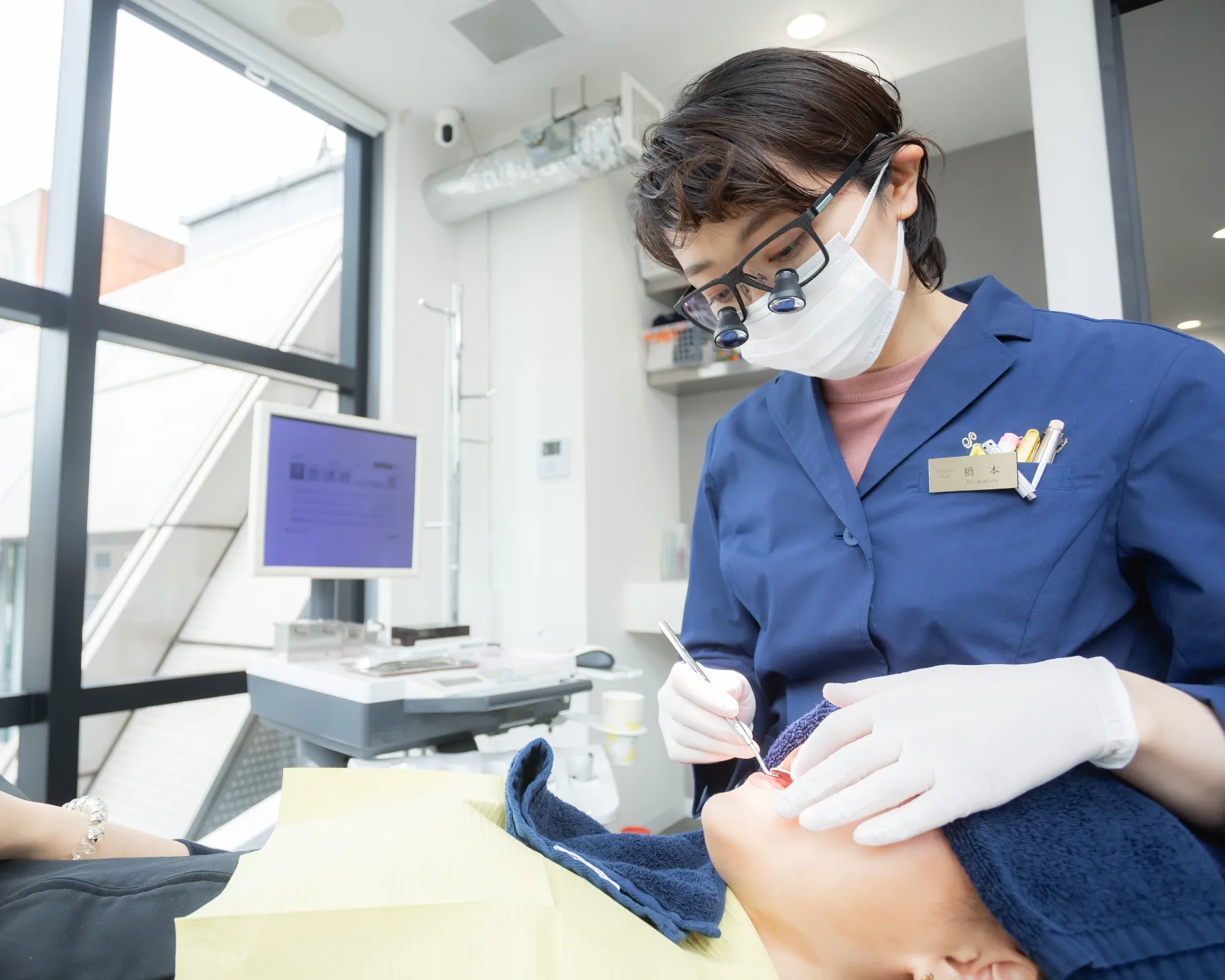
Handa dentist | 歯科ドクターHa
Types of Dentures
① Insurance-covered (resin base) / self-pay (clasp-free dentures, titanium base, cobalt-chrome base)
② Partial dentures / complete (full) dentures — dentures come in several types depending on how they are classified.
Advantages and disadvantages of dentures
Advantages
Treatment takes relatively few visits and little time. Because they’re removable, you can keep your mouth clean. They’re less invasive (no damage to the jawbone, gums or remaining teeth).
Disadvantages
They take some time to get used to, chewing strength is hard to fully restore, and putting them in and taking them out can be a nuisance.
How to use and care for dentures
-
When you start wearing dentures, begin with soft foods and move on to harder foods gradually.
-
Take your dentures out before bed.
-
Clean them by brushing under running water. (Brushing with toothpaste or disinfecting with hot water can scratch or warp dentures, so avoid this. If you are concerned about stains, you can use a denture cleaner available in shops.)
-
When you take your dentures out, keep them soaked in water, and when you go out, keep them in a dedicated denture case.
-
For anything else about looking after your dentures, please follow your dentist’s guidance.
Pain with dentures
When you first start wearing new dentures, sore spots on the gums where they press are hard to avoid. Getting a snug fit often takes several adjustments (usually 4–5).
Handa dentist | 歯科ドクターHa
Denture Prices and Insurance
Insurance-covered
¥10,000
(approx.)Self-pay
From ¥90,000
Warranty period (self-pay only): 2 to 5 years. * This varies with the material used and the case.
FAQ about dentures
- QHow many visits does it take to make dentures?
- AIf only a few teeth are being replaced:
① Impressions and bite record ② Dentures completed
If many teeth are being replaced:
① Examination and diagnosis (simple impressions are taken to check things such as the condition of your teeth and gums and your bite) ② Impressions (precise impressions used to make the dentures) ③ Bite record ④ Try-in (you try dentures made from temporary material to check things like how the teeth look and their color. It’s like trying on shoes or clothes.) ⑤ Fitting (the finished dentures are put in.) ⑥ Adjustment (if anything is wrong once you start using them, such as pain, we work to improve it. Over several adjustments, we bring the dentures to a good fit.)
- QI’m worried that wearing dentures will make it hard to talk.
- AAt first they feel strange and you may find it hard to speak, but many people get used to them after about a month. There are also relatively thin dentures that feel more natural in the mouth.
- QI don’t want other people to notice that I wear dentures.
- AThere are self-pay options such as non-clasp dentures, where the part that hooks onto the teeth is hard to see. Ask us about them.
- QDo I need regular checkups even if I wear dentures?
- AYour remaining teeth need maintenance, the gum tissue where the dentures rest needs to be checked (it can be injured even without pain, and in rare cases this can lead to oral cancer), and the dentures themselves need to be checked and adjusted. As with regular dental checkups, please come in at least once every 4 months.
- QMy denture has cracked. Can I repair it with adhesive?
- ADentures are made with special materials and equipment used at dental offices and dental labs. Repairing or adjusting them yourself often ends up putting more strain on your teeth and gums, or makes them harder for us to repair. If your denture breaks or doesn’t fit, please be sure to bring it in as is.